
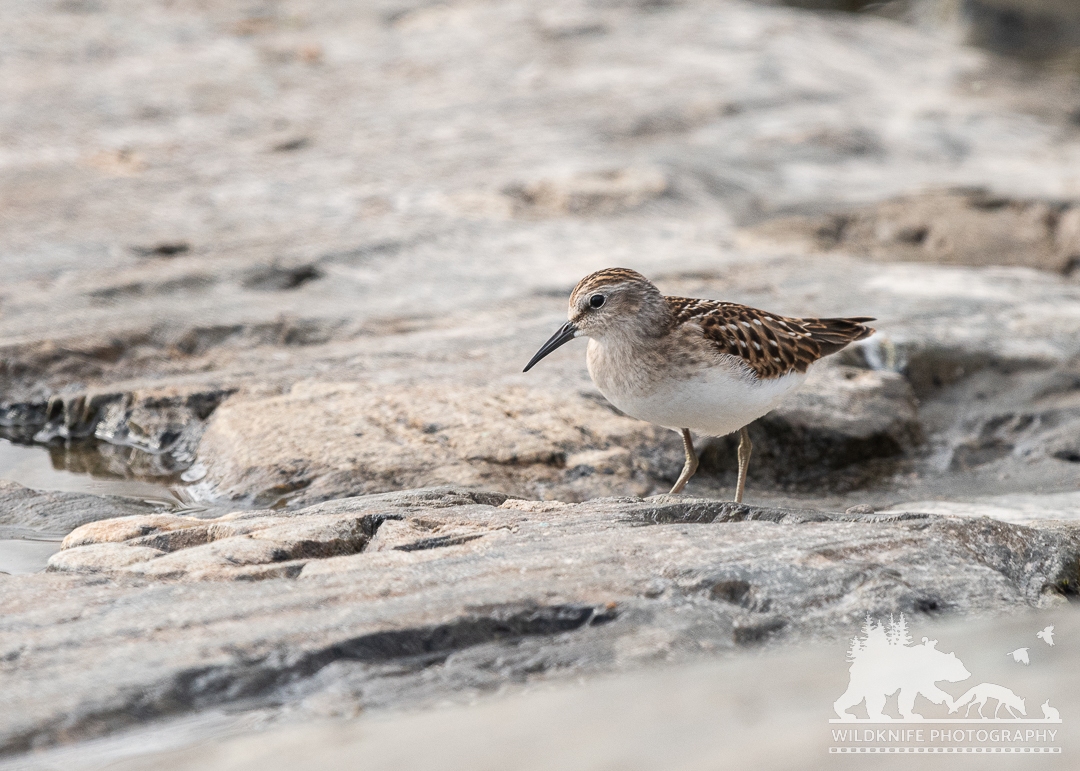
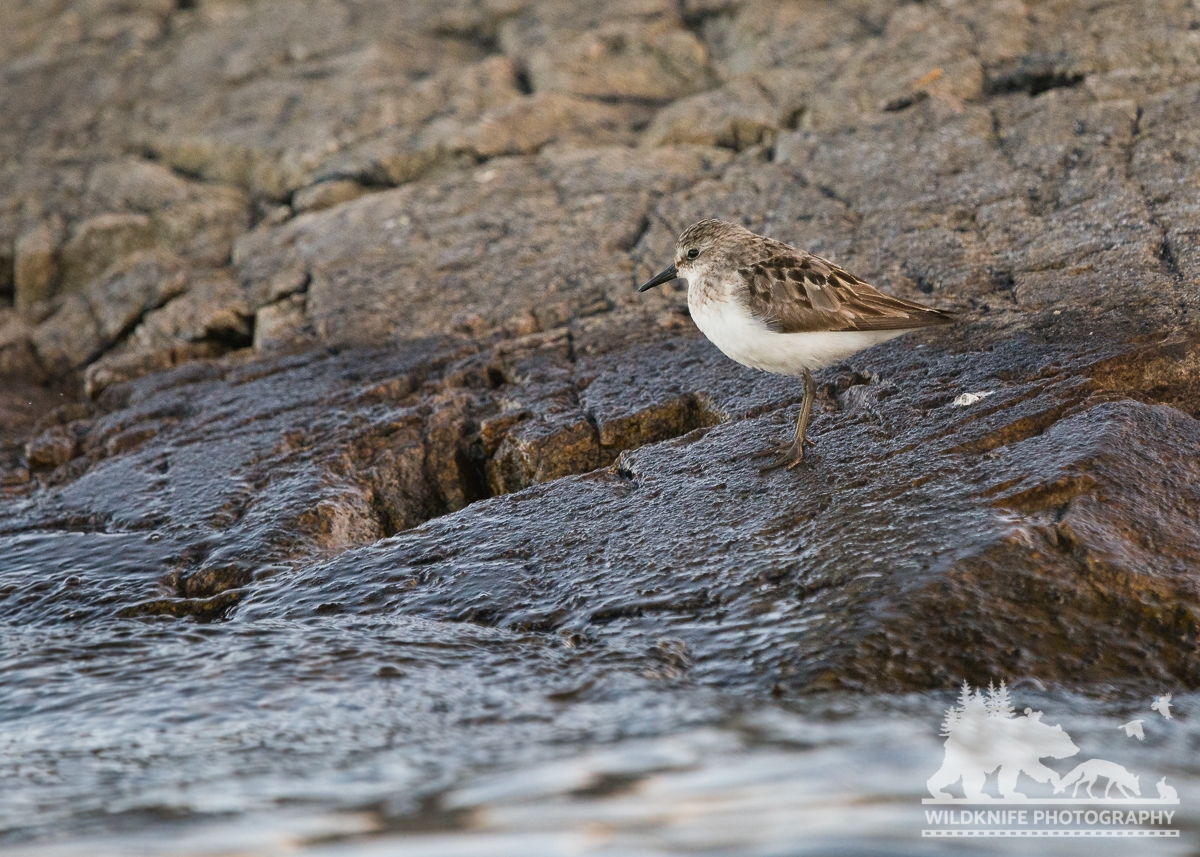
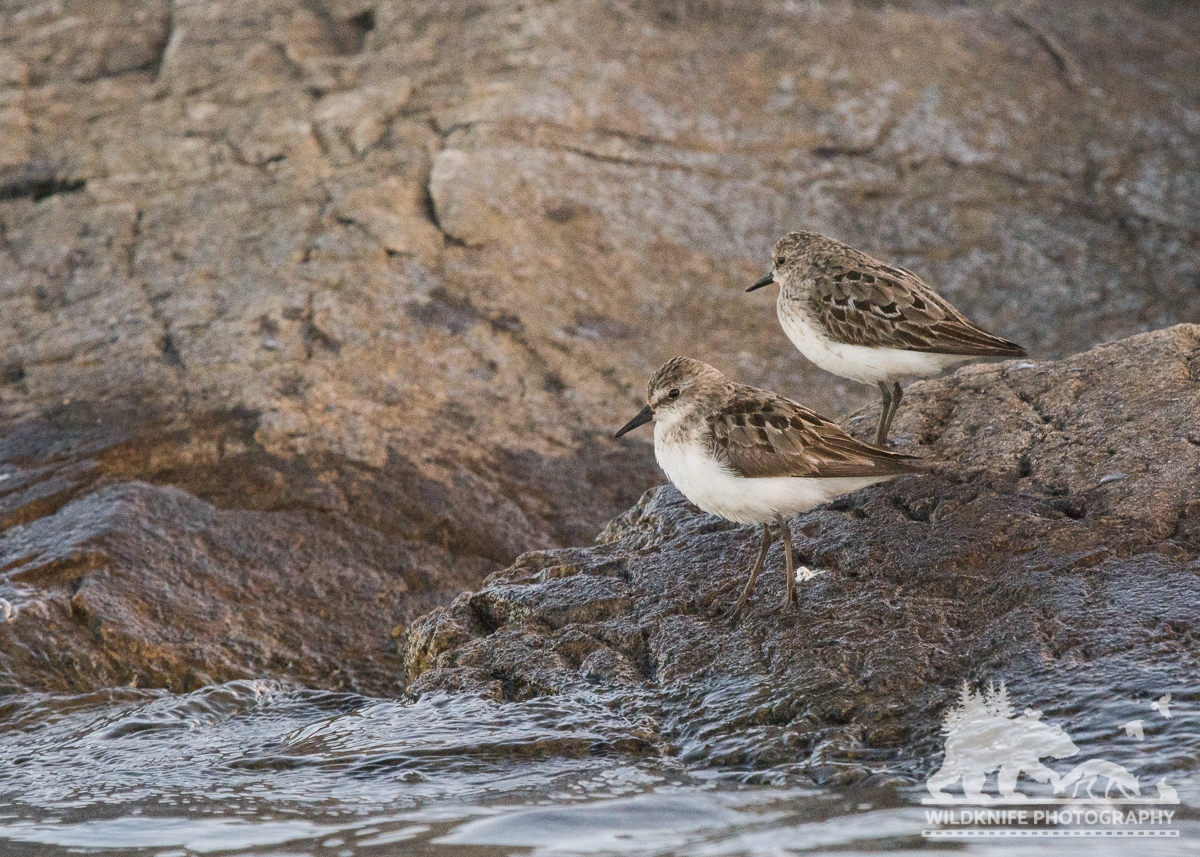
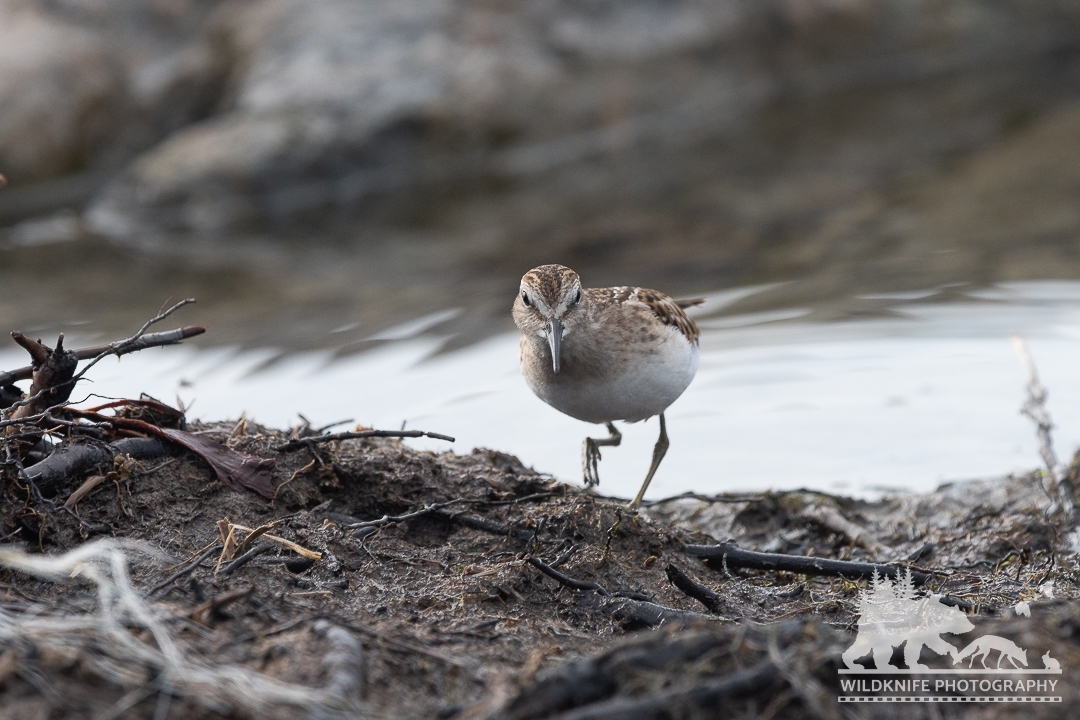
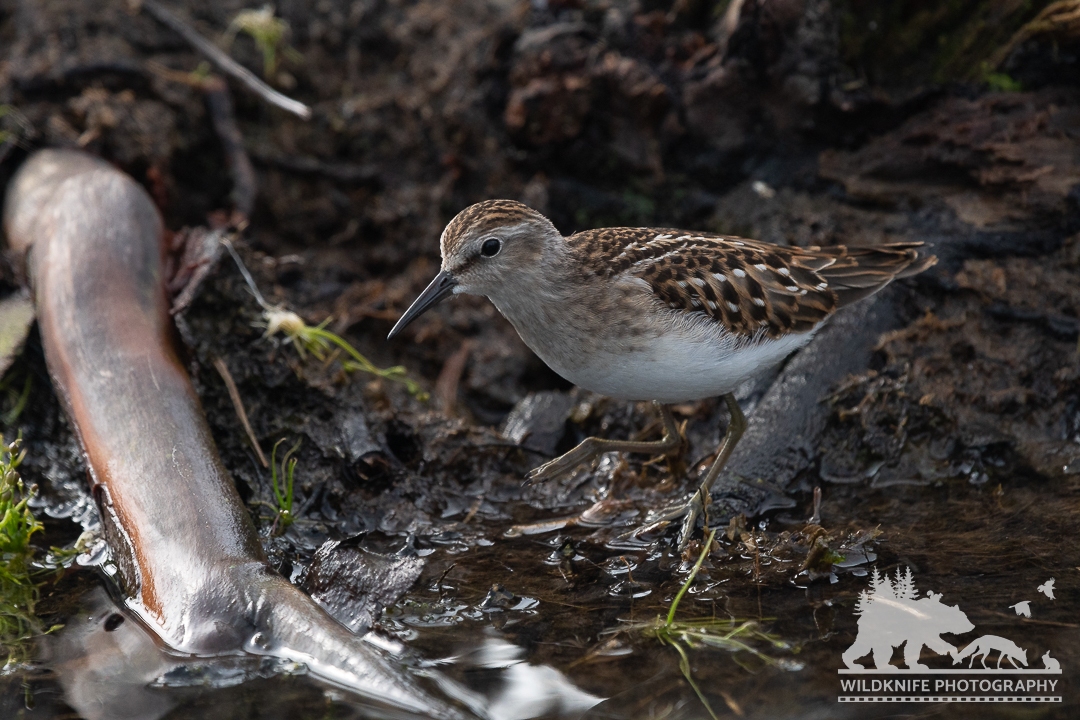
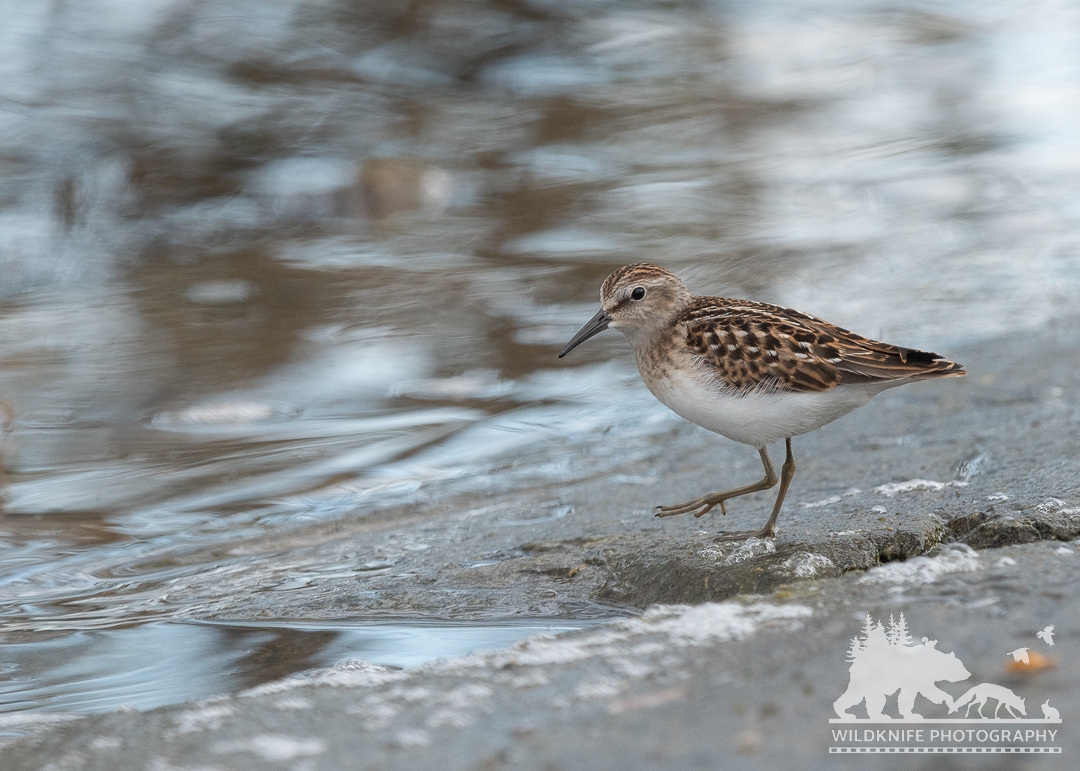
This week I have some images of the smallest sandpiper in the world, the least sandpiper. Because it is the smallest it is one of the easier shorebirds to identify! They have yellow legs and a black bill with a brown back that has rusty tint in the breeding plumage. When they are in their non-breeding plumage their feathers are much more pale and have a smudgy “collar” down their breast.
Even thought they are small, Least Sandpipers can travel over 4000 kilometres in a day! They can be found across northern Canada during their breeding season in the spring and summer, the rest of the country can see them during migration.
The males are smaller than the females and they usually spend most of their day incubating the eggs while the female is foraging. When she returns in the evening the males take their turn. Males don’t have to forage in the dark because it is usually light out most of the day in their breeding areas.
I’ve found that Least Sandpipers are quite tolerant of photographers. I generally find them alone or in pairs though sometimes I’ll see small groups of 6-12 late in the summer when they begin their migration. Unlike other shorebirds who migrate in flocks in the hundreds and thousands, Least Sandpipers like to keep their travel groups much smaller.
The oldest Least Sandpiper on record was a female, and at least 15 years old when she was recaptured and released by a Nova Scotia researcher in 1985.
I hope you enjoyed learning about Least Sandpipers with me. I’ll see you again next week!