
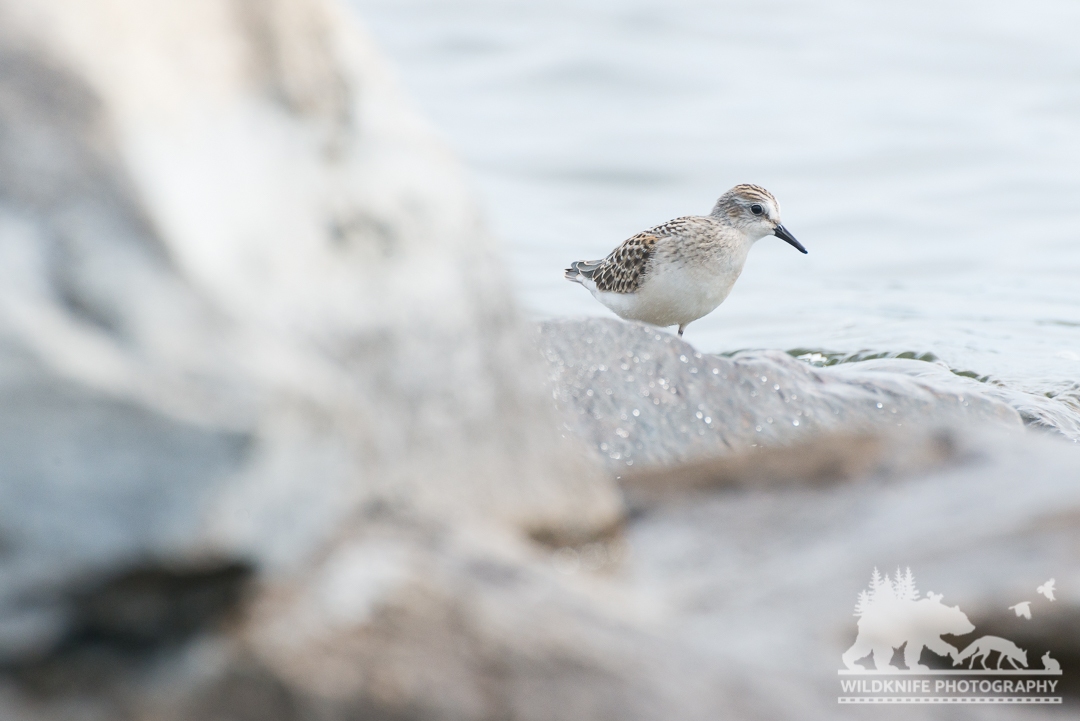
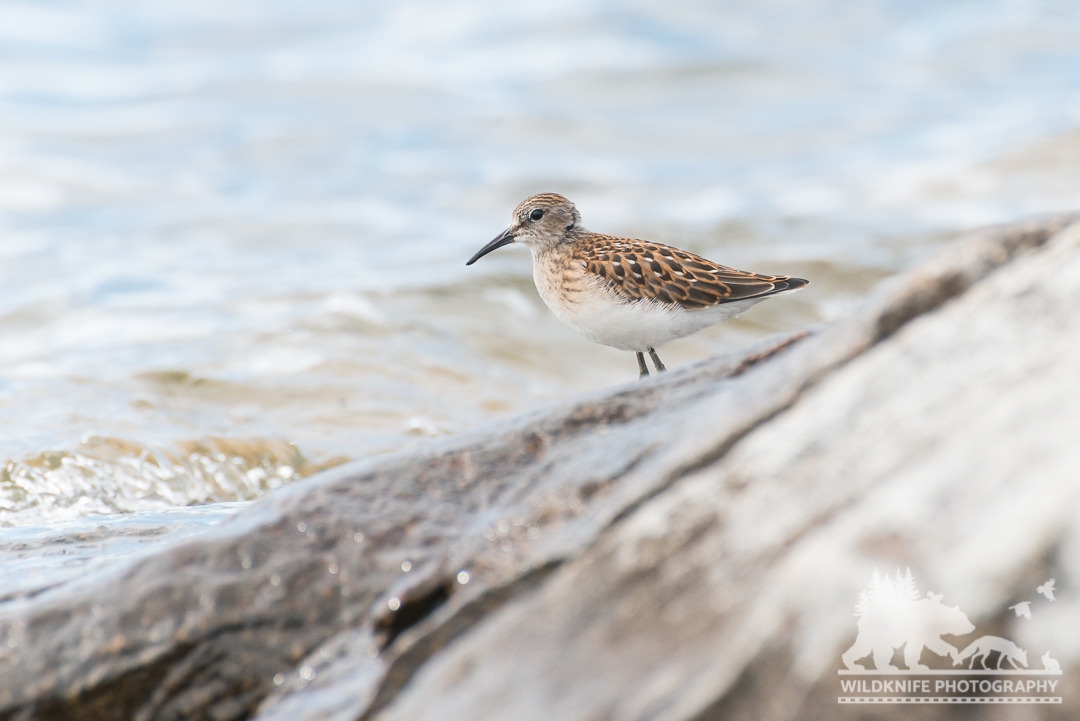
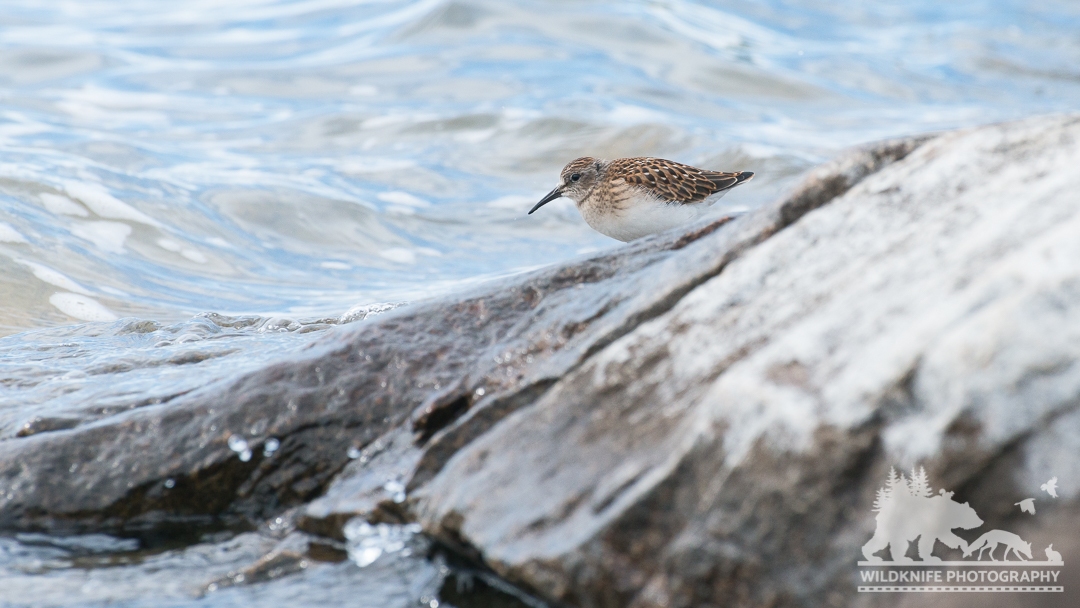
I have found birding a great way to improve my attention to detail and shorebirds are one of those classes of birds that really make you pay attention. Something as simple as different coloured legs or a slight upward or downward curve to the bill can make the difference between a rare sighting and a common one.
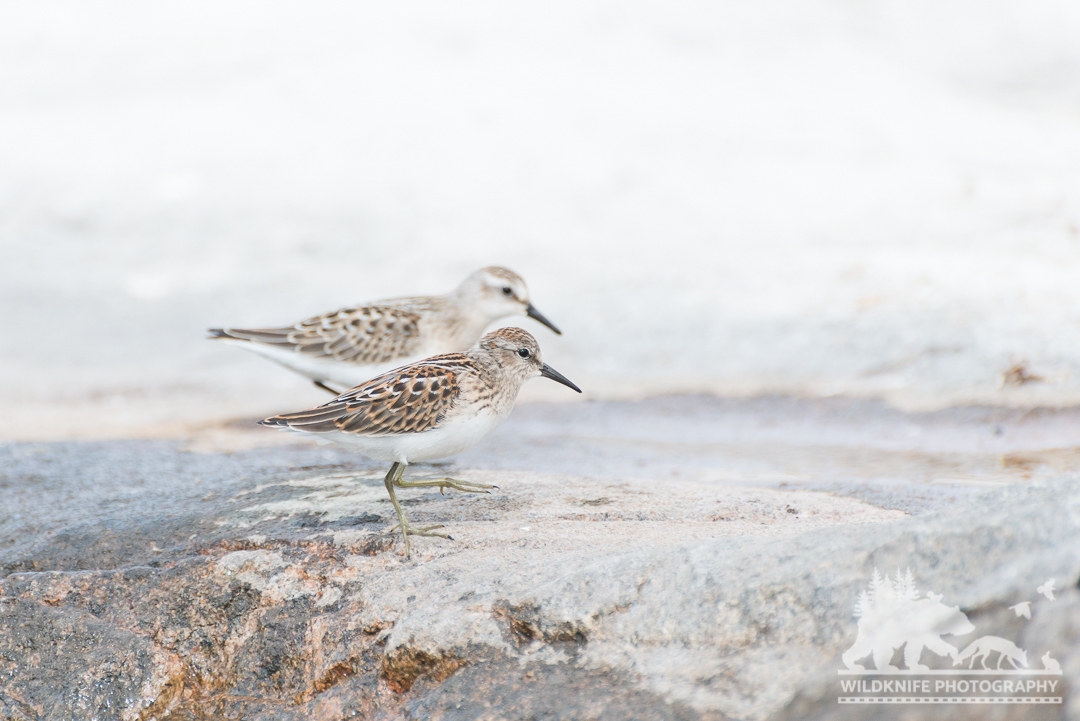
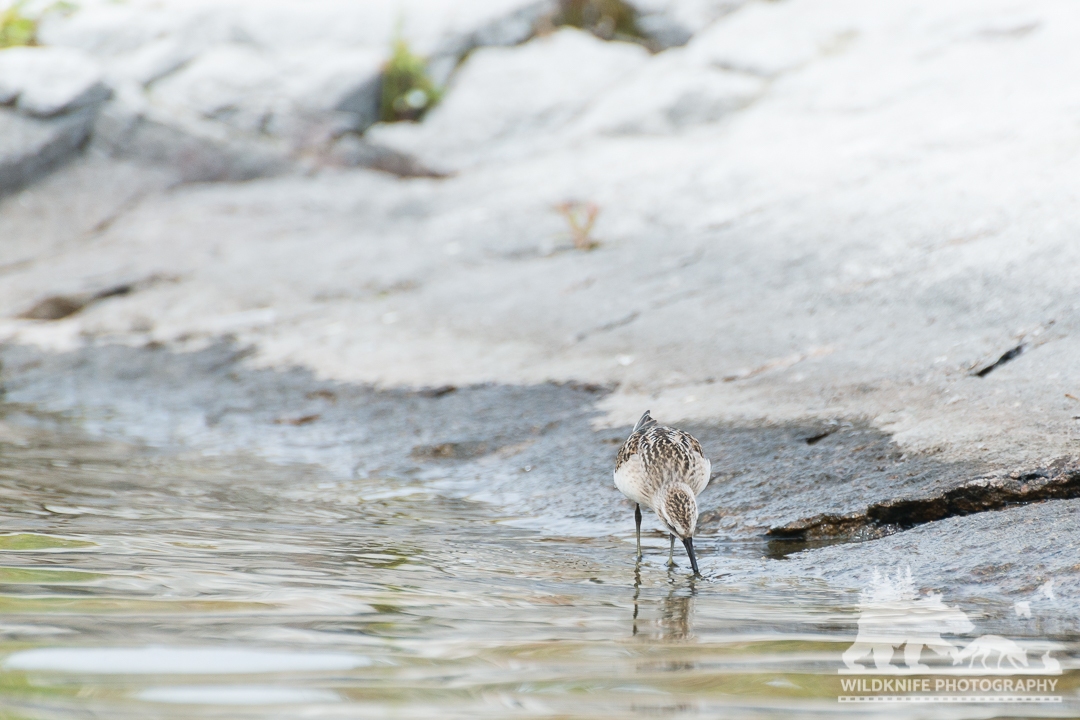
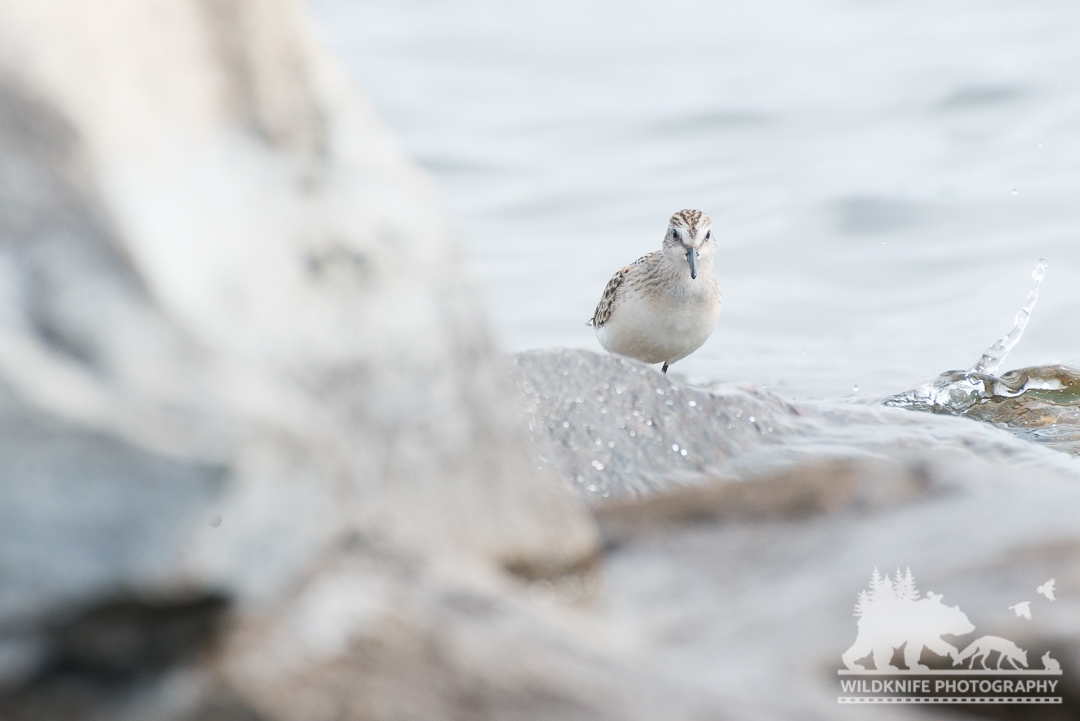
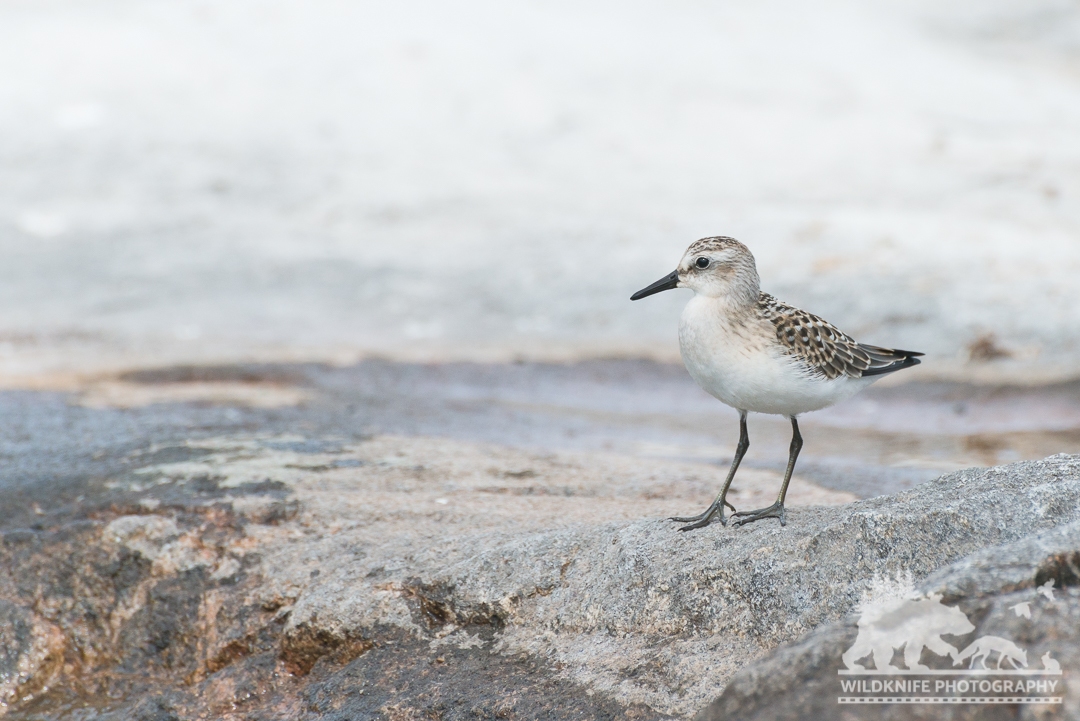
On this day I was kayaking around a small island that had a few lingering shorebirds. I recognized the Least Sandpipers as they are the smallest species of sandpipers and common around Yellowknife in the summer months. After my second trip around the island, I stopped to photograph a pair and noticed that one was slightly larger. As I continued shooting, other differences became apparent: different coloured legs, slightly different colouring and pattern. I wasn’t sure which other sandpiper I was seeing but knew that it was different. Thank goodness for field guides!
The second bird turned out to be a Semipalmated Sandpiper. My friend and birding ID mentor explained that semipalmated refers to the bird’s half-webbed feet; the membrane between their toes extends only partway unlike gulls or ducks. You can see this in one of the photos if you look closely. Western Sandpipers are the only other small sandpiper with similarly webbed feet.
One thing I really appreciate about sandpipers is that many of them aren’t as skittish as some other birds and if you sit quietly they will often feed within a few metres of you and give you plenty of opportunities to observe and photograph them.
A couple of interesting facts (because you all know how much I love random facts about birds) male Least Sandpipers are the smallest of all the shorebirds as the females are slightly larger. The oldest Least Sandpiper on record was a female, and at least 15 years old when she was recaptured and released by a Nova Scotia researcher in 1985.
The oldest recorded Semipalmated Sandpiper was at least 14 years, 2 months old when it was recaptured and re-released during banding operations in New Brunswick.
That’s all for this week. I hope you enjoyed learning a little bit about these tiny birds. When the birds return in the spring, keep your eyes open for these “peeps” around the edges of lakes and in muddy flats where they feed an nest. See how many different species you can spot!