
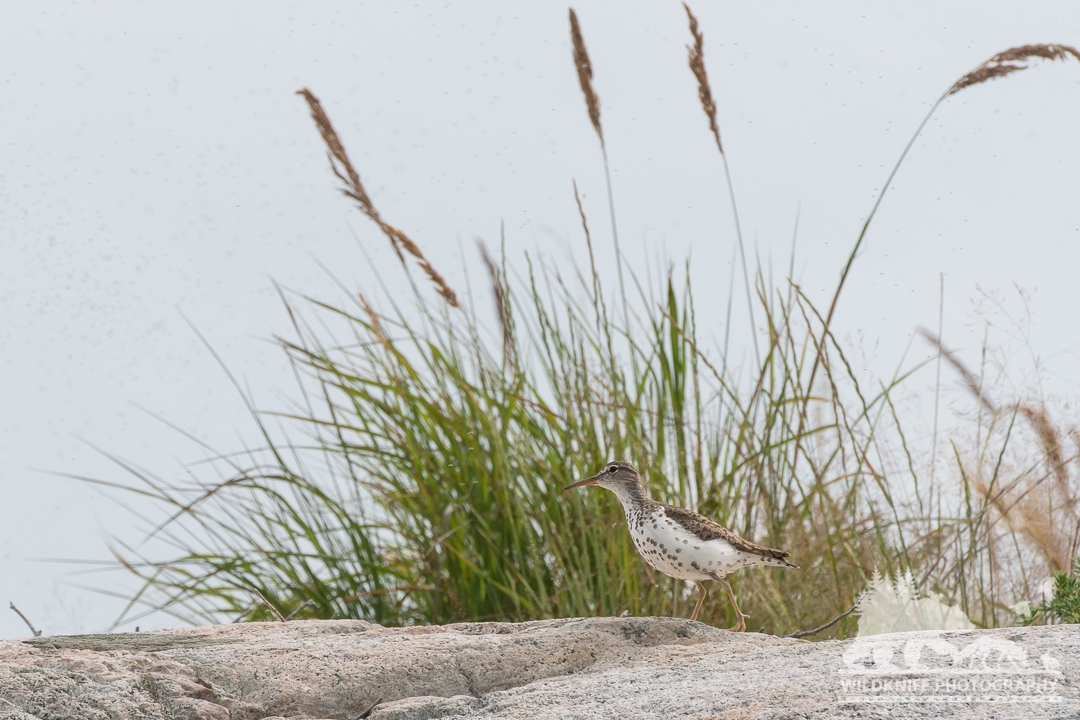

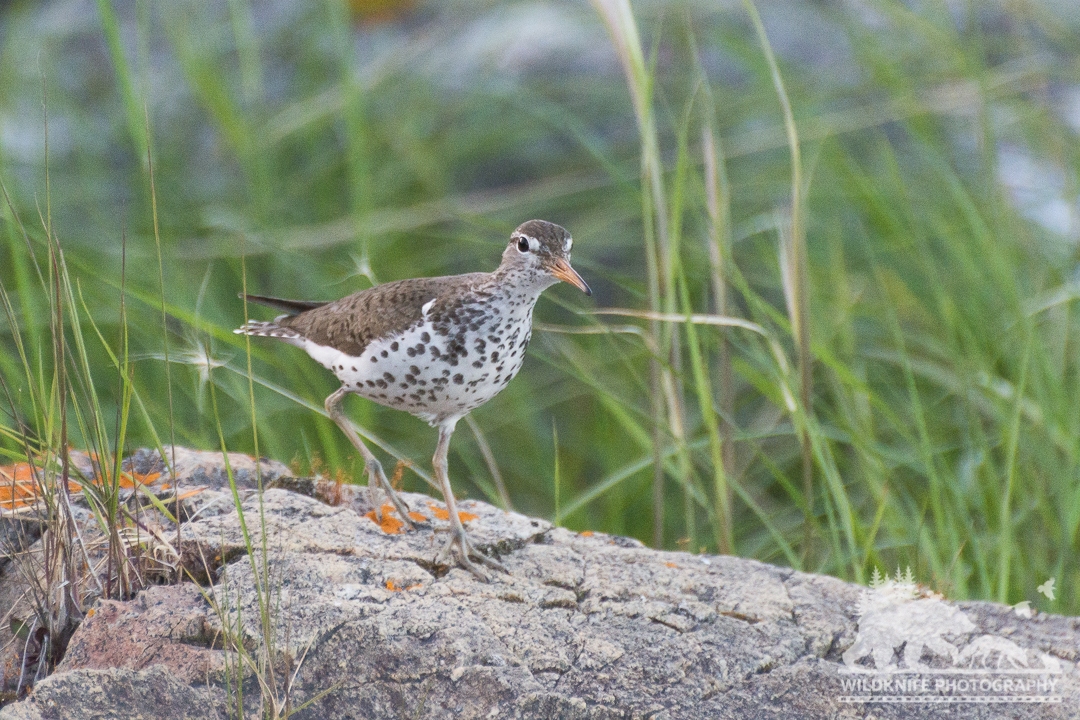
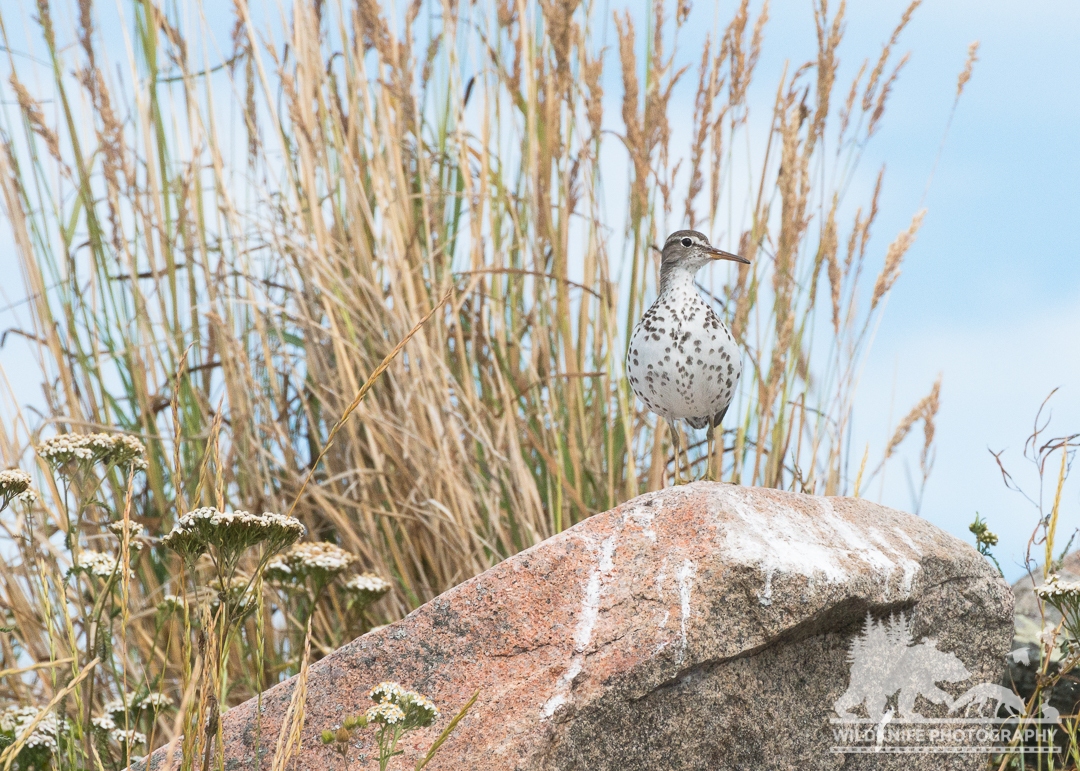
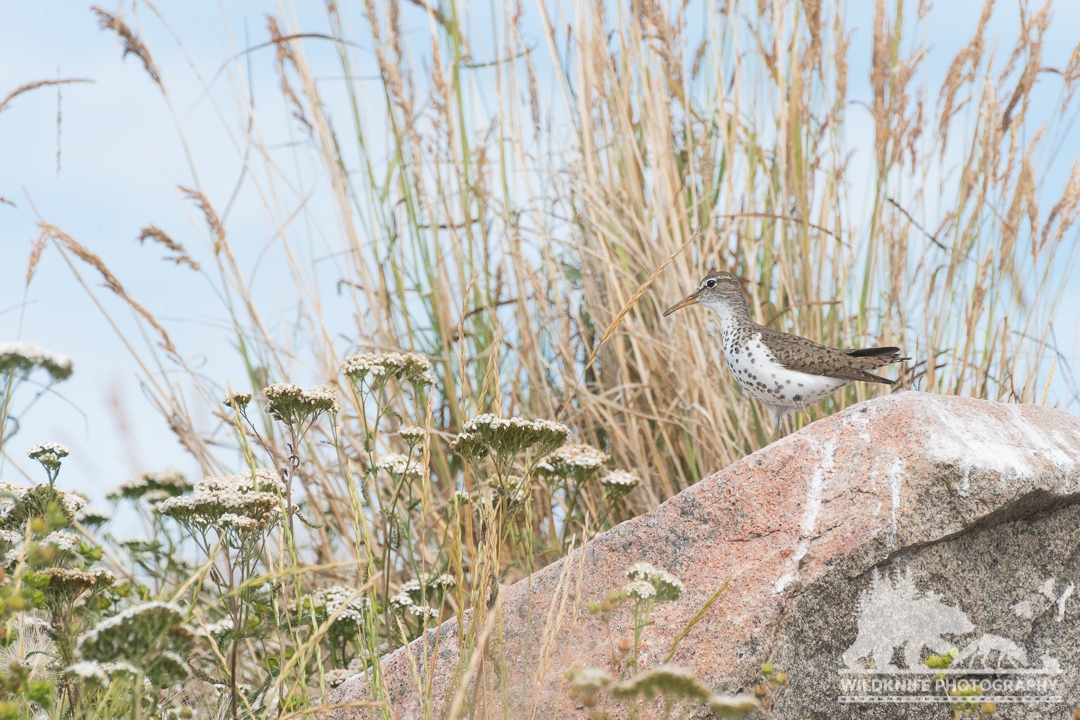
Spotted Sandpipers are really interesting birds. I had no idea how unique they are until I started doing a little research. During the spring migration, female birds arrives first to establish and defend territories rather than males. Female birds in certain locations will breed with multiple males and lay eggs in more than one nest. The male birds are the ones that incubate the eggs and raise the chicks sometimes with little or no help from the female birds.
Female birds can hold onto male sperm for up to a month so the chicks that a male bird rears may not even be his own offspring. Spotted Sandpipers will often nest near or with Common Terns when they are in the same area. My guess is that the terns offer proximal security due to their aggressive nature toward anything that moves!
The photos here were taken in Yellowknife in an area with an Arctic tern colony. In some cases, the sandpipers and terns were nesting in the same location in the other, terns were nesting nearby.
I had never seen a juvenile Sandpiper before and capturing this fluffy little nugget was pretty special. They move really fast and take cover in dense vegetation which makes them hard to spot. Maybe next year I’ll get a better shot at a juvenile Spotted Sandpiper’s face!
The oldest recorded Spotted Sandpiper was a male, and at least 12 years old when he was recaught and rereleased during banding operations in New York.
That’s all for this week I hope you enjoyed learning about Spotted Sandpipers as much as I did.