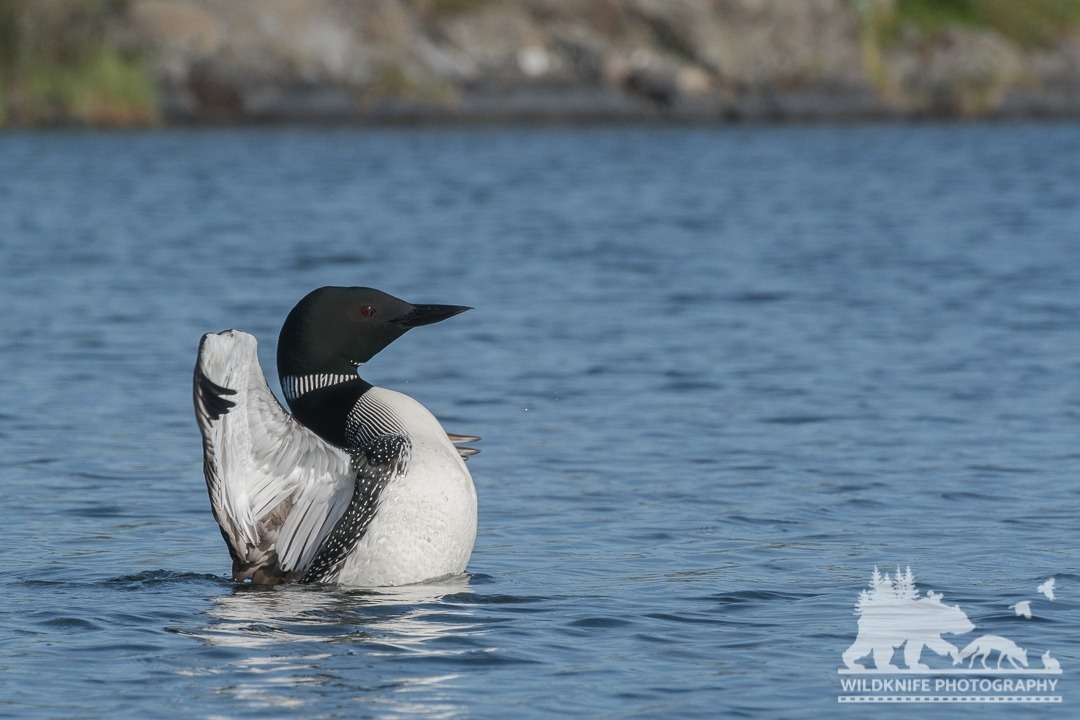
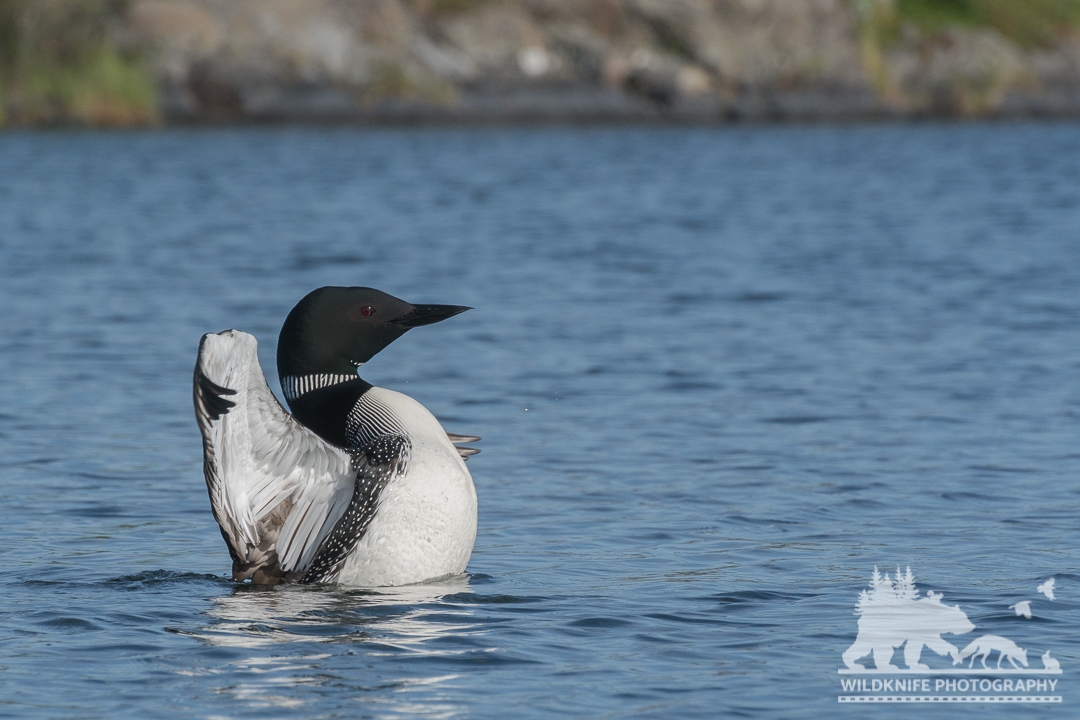
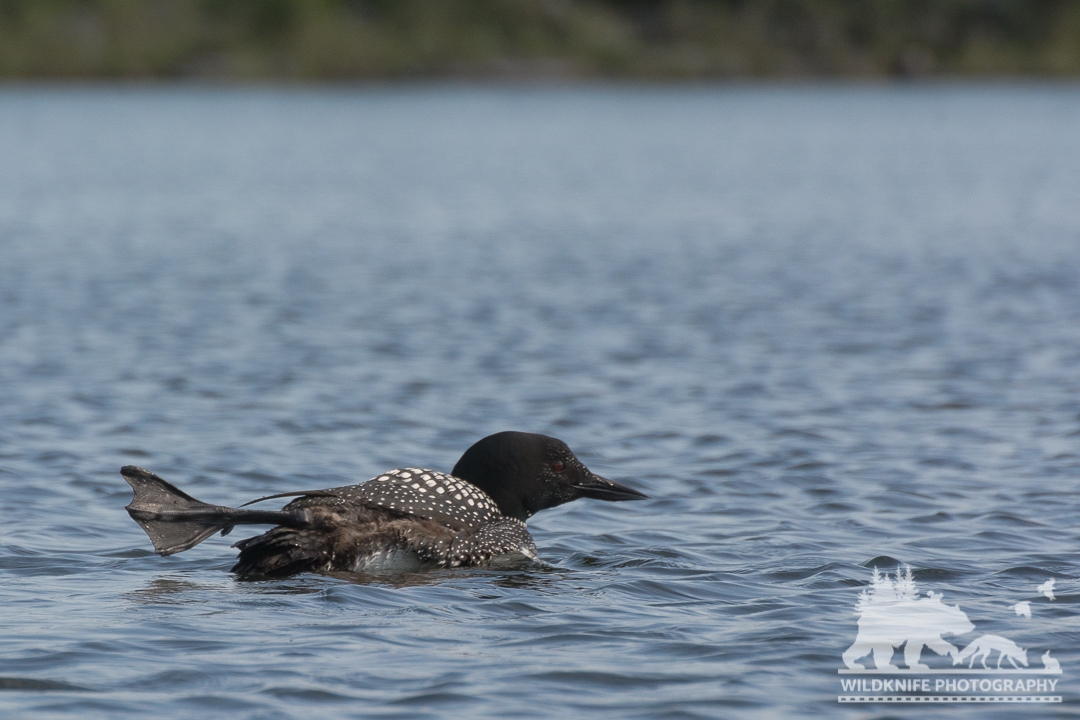
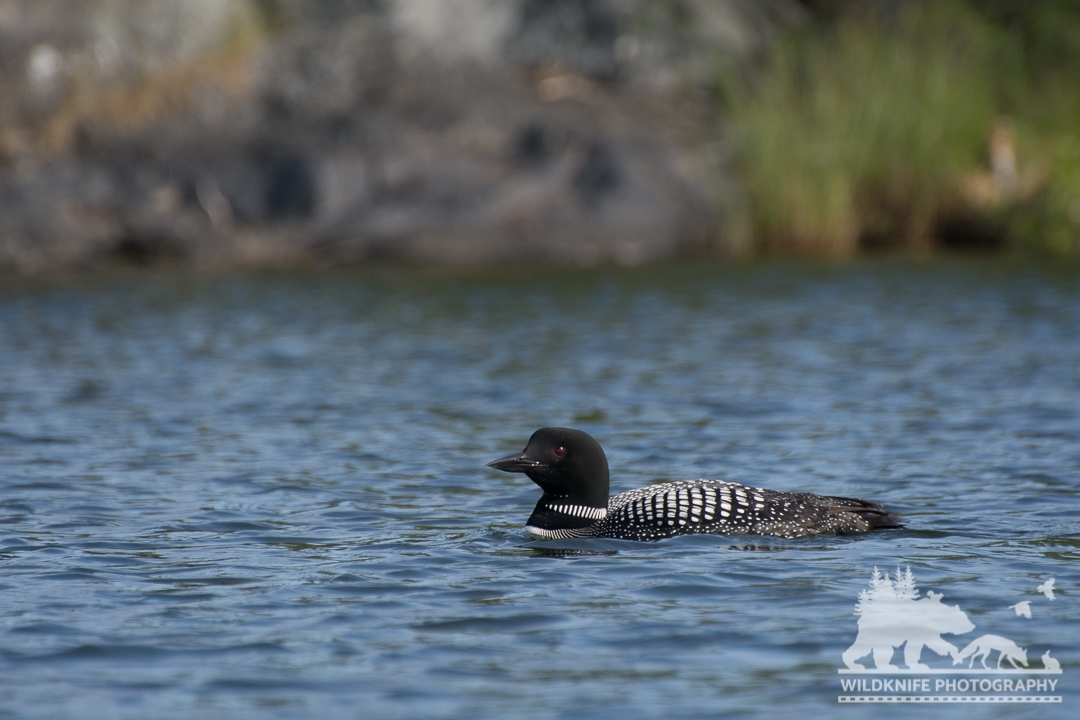
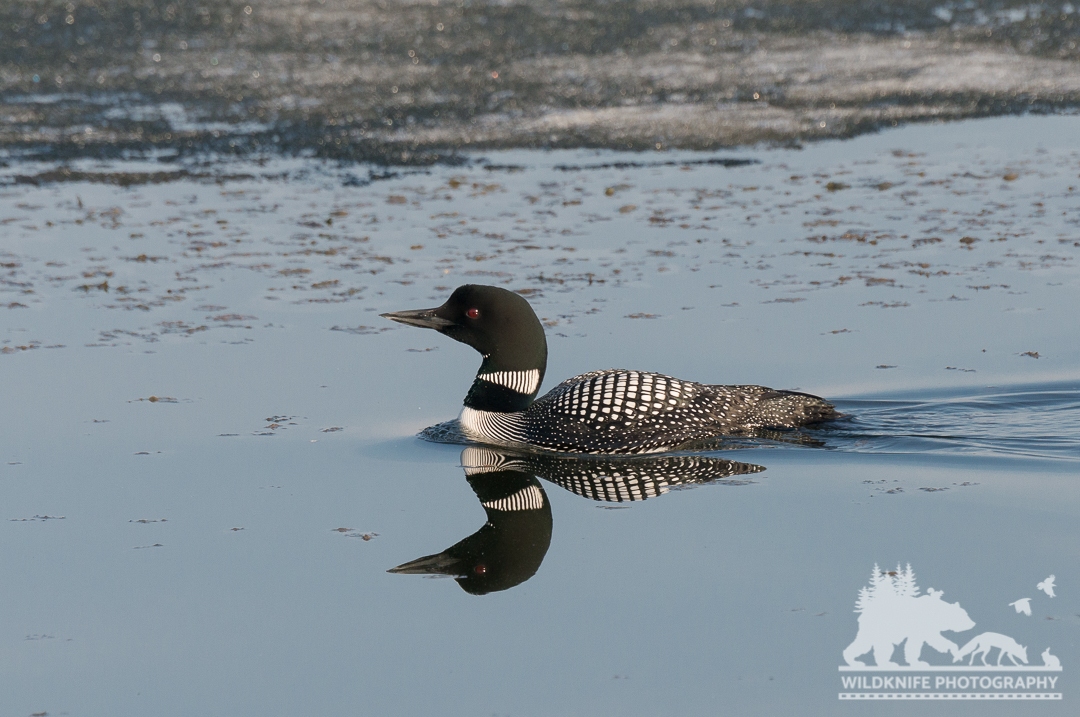
In my experience, loons can be quite curious and bold birds. I have often had them swim closer to me to get a better look at what I’m up to. I’m always excited to see them pop up near my kayak or swimming past me near the shore of a shallow lake. They don’t like it when I follow them in my kayak but if I sit quietly, they will often approach me.
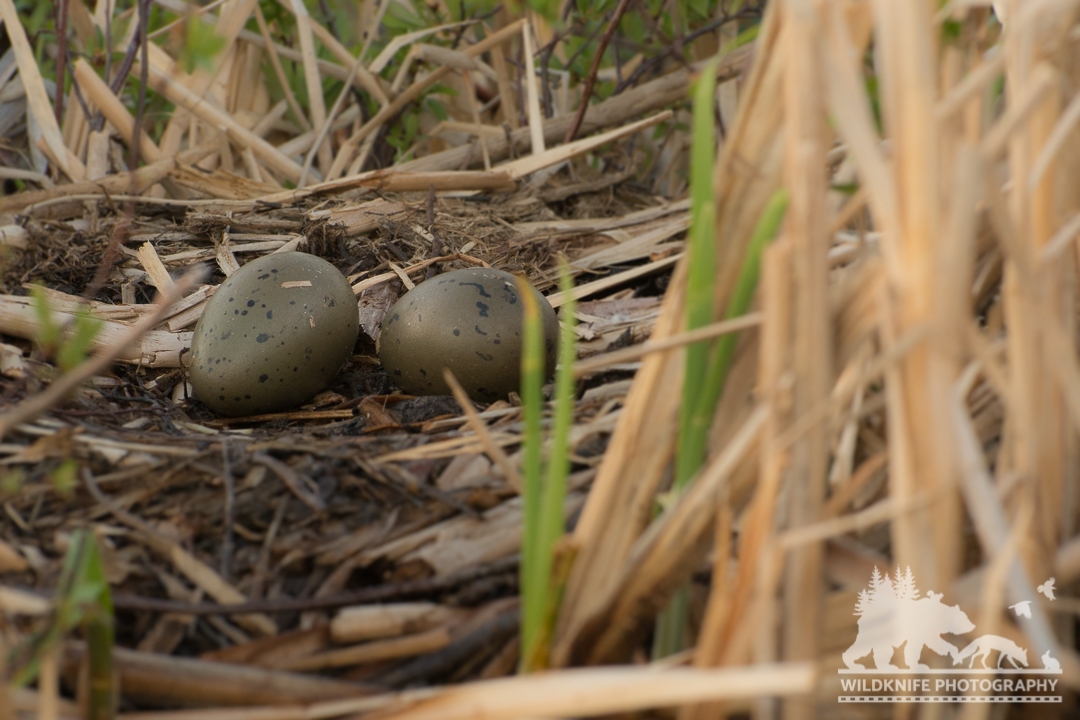
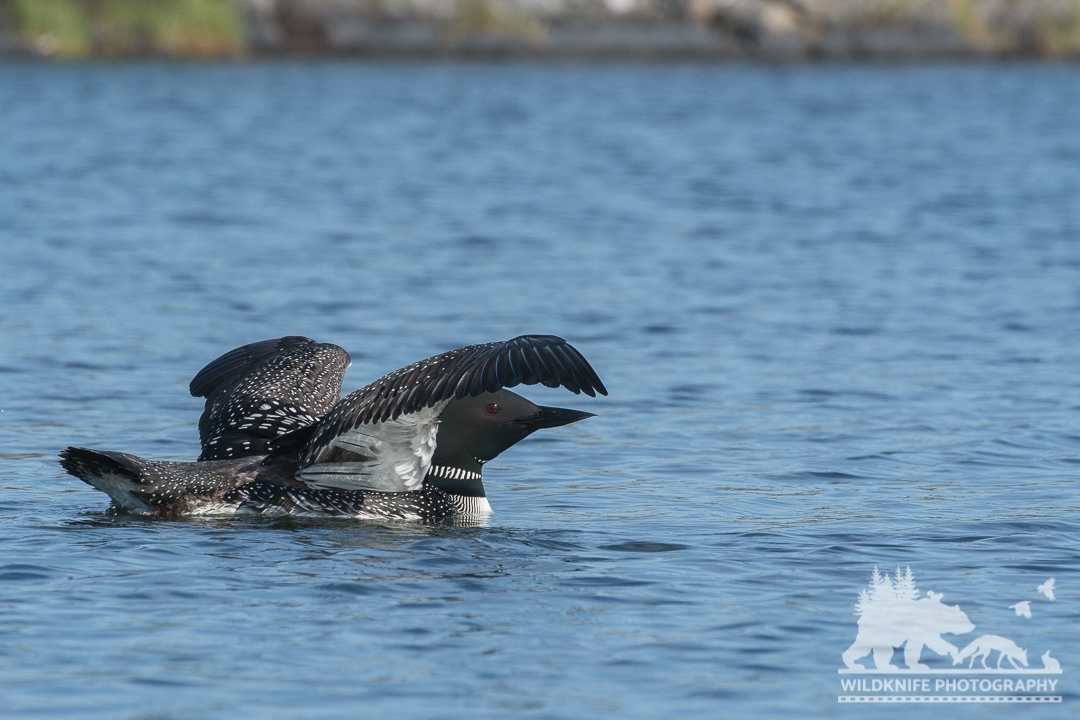
When I see loons up close I’m reminded of just how large they really are. Loons weigh between 2.5-6.1kg (5.5-13.4 lbs) and have a wingspan over a metre (yard) long. They often look awkward on land because their legs are set far back on their bodies. To avoid long walks, loons build their nests along the edge of lakes often near a steep underwater drop off so they can swim right up to their chicks. The loons’ anatomy makes them powerful swimmers but it also means they need a long “runway” to get airborne. Looks run across the top of the water and flap their wings to gain enough speed to get airborne. Because of their shape, they need between 30 and 400 metres to get up in the air. Loons can get stranded in ponds that are too small for them to take off and are sometimes stranded on wet highways or parking lots mistaking them for lakes or rivers.
Loons dive for small fish and crustaceans as well as for leeches and larvae that they feed their growing young. They can dive up to 55m (180 feet) and make hairpin turns underwater. Most dives last less than a minute but if necessary a loon can stay submerged up to 15 minutes!
During my research I discovered that there is a term to describe when a loon puts its foot up into the air — it’s called a foot waggle! Loons do this to cool themselves down by repeatedly waving their wet foot in the air and dipping it in the water.
Juvenile loons don’t migrate with their parents. Adult loons begin migrating south after their chicks are about 12 weeks old. Juvenile loons flock together in the North and then head south together about 3 weeks later. They won’t return to the north for about three years. A loon doesn’t typically breed until it is six years old.
The oldest recorded Common Loon was a female, and at least 29 years old, 10 months old when she was spotted in Michigan in 2016 and identified by her band. She had been banded in the same state in 1989.
I hope you enjoyed this week’s look at the common loon. Thank you for stopping by and have a great Sunday!